 TREVO
Updated November 2026
Kuala Lumpur's best-known temples are Batu Caves with its 272 rainbow steps, hilltop Thean Hou Temple, and Sri Mahamariamman, the city's oldest Hindu temple, founded in 1873. Most are free to enter and easy to reach by train, bus or Grab. This guide covers opening hours, dress codes and routes, updated November 2026.
The ten stops below are ordered the way we would actually plan them: the two landmarks first, then the walkable Chinatown cluster, then the quieter corners worth a detour. Each entry keeps the practical detail up front, meaning where it is, when it opens, what to wear and what it costs, which is usually nothing.
At a glance: ten KL temples, the practical version
| Temple | Key fact | Best for |
|---|---|---|
| Batu Caves | Free main cave, 272 steps; KTM Komuter from KL Sentral in about 30 to 40 minutes | The landmark half-day trip |
| Thean Hou Temple | The largest Chinese temple in KL; shrine opens from 8 am; hilltop views | Lanterns and skyline photos |
| Sri Mahamariamman Temple | Oldest Hindu temple in KL, founded 1873; opens in two daily sessions | A Chinatown walking route |
| Sin Sze Si Ya Temple | Oldest Taoist temple in KL, founded 1864 by Kapitan Yap Ah Loy | Quiet history in the old city |
| Guan Di Temple | Built 1888, bright red walls beside Petaling Street | A lively Chinatown stop |
| Chan See Shu Yuen Temple | Clan temple founded 1906, covered in carvings and ceramic figures | Architecture detail |
| Wat Meh Liew Temple | Thai Buddhist temple from 1929, with a large golden Buddha | A calm morning away from crowds |
| Kuan Yin Temple | Small shrine on Jalan Maharajalela; open about 9 am to 5 pm | A five-minute mercy-goddess stop |
| Deng Be Ann and Chee Wan San | Two smaller stops near KLCC and along Jalan Sungai Besi | Filling out a full temple day |
Pro tip: Carry a scarf or sarong on temple days. Shoulders and knees stay covered at Hindu and Buddhist temples, shoes come off before shrine halls, and at Batu Caves the dress code is enforced, with sarongs available to rent at the entrance if you arrive unprepared.
When Wesak Day and Thaipusam fill the temples
Any of these temples reward an ordinary weekend visit, but two dates reshape them entirely. Thaipusam comes first, on Friday 22 January (2027), when Batu Caves draws the biggest crowds it will see all year and the KTM trains fill up long before noon. Wesak Day follows on Thursday 20 May (2027), when the city's Buddhist temples hold dawn prayers and lantern processions, and Thean Hou runs at its atmospheric best. If you only ever visit during these festivals, go early; if you want the temples to yourself, pick any other week and the practical details below will carry you.
1. Batu Caves: 272 rainbow steps north of the city
Batu Caves is the landmark most people mean when they say "KL temples". In Gombak about 13 km from the city centre, the complex is guarded by a 42.7 m golden Murugan statue, the tallest in Malaysia, and a staircase of 272 painted steps leading into the main Temple Cave, which is free to enter. Side attractions such as the Ramayana Cave charge separate admission. The dress code is enforced here, and sarong rentals at the entrance carry a small fee. The grounds open daily from roughly 7 am to 9 pm. To get there without a car, take the KTM Komuter direct from KL Sentral to Batu Caves station, about 30 to 40 minutes for around RM2.60 each way (checked November 2026), and the station sits at the foot of the steps.
Pro tip: Aim to arrive before 9 am. The steps are cooler, the queues shorter and the light better for photos, and you will be back in the city before the midday heat.
If you would rather set your own timetable, renting a car for a Batu Caves day trip lets you pair the caves with stops along the way that trains skip.
2. Thean Hou Temple: lanterns over Seputeh
When KL locals name a favourite temple, Thean Hou usually wins. Set on a hill at Robson Heights in Seputeh, the six-level temple is dedicated to Mazu, the Chinese sea goddess, and was completed in 1987 by the Hainanese community. It is generally counted as the largest Chinese temple in KL, and the scale shows: red pillars, dragon motifs, wide courtyards and long rows of lanterns hanging over the staircase. The shrine opens from 8 am and the grounds stay open later into the evening, and entry is free. Wesak Day and Chinese New Year fill it to the edges, but even on ordinary weekends it gives you one of the better skyline views in the city.
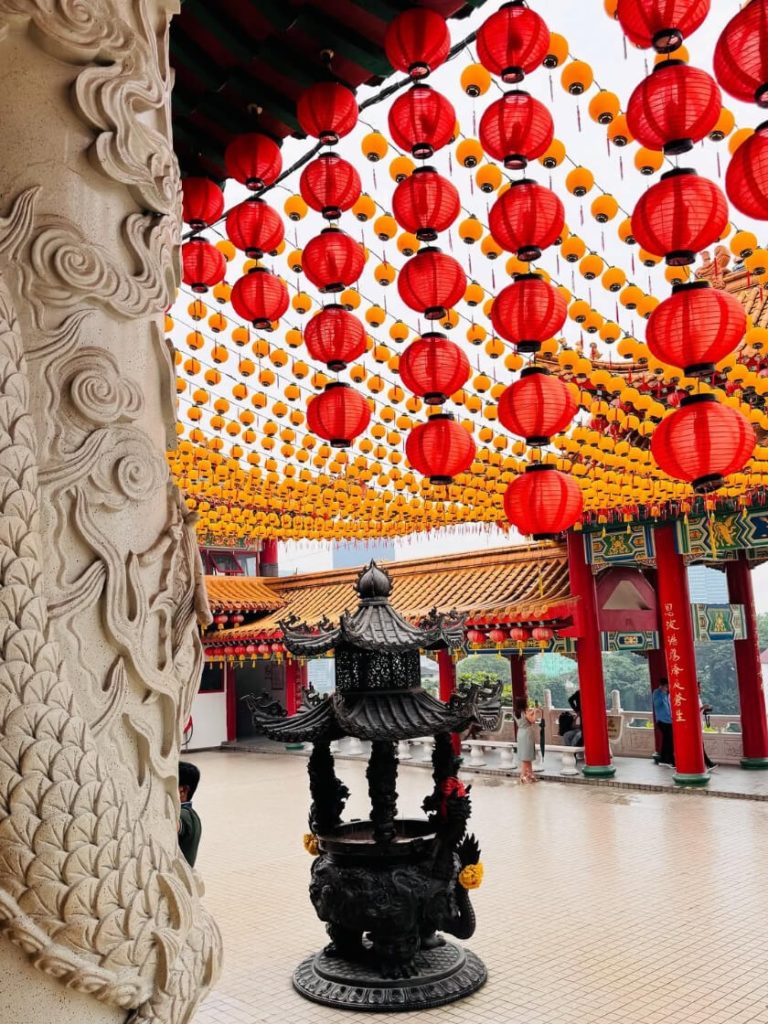
Pro tip: Stay until sunset if you can. The lanterns glow, the heat drops and the photo crowds thin out just as the view improves.
For history, layout and festival timings in depth, we keep a separate deep dive: our full Thean Hou Temple guide.
3. Sri Mahamariamman: the oldest Hindu temple in KL
Sri Mahamariamman was founded in 1873, which makes it the oldest Hindu temple in Kuala Lumpur, and it still anchors the Chinatown edge of Jalan Tun H.S. Lee. The sculpted gopuram facade above the entrance is the photograph most visitors come for, packed with figures and painted detail that reward a slow look. Entry is free, and the temple opens in two daily sessions, roughly 6 am to midday and 4 pm to 8:30 pm, with exact boundaries shifting a little from day to day.
Pro tip: Plan around the afternoon gap. A visit between the sessions finds locked doors, so slot Sri Mahamariamman either early morning or from 4 pm, then walk into Chinatown from there.
4. Sin Sze Si Ya: the oldest Taoist temple in KL
Sin Sze Si Ya dates to 1864 and carries a founder most KL street names still honour: Kapitan Yap Ah Loy, who built it to venerate Sin Sze Ya and Si Sze Ya, deities credited with protecting the early settlement. Inside, dark wooden beams, hanging coils of incense and old carvings make it feel a world away from the traffic on Jalan Tun H.S. Lee outside. It is usually quiet, and it is a working temple, so give worshippers space and keep voices low. Opening hours run from about 7 am to 5 pm daily.
Pro tip: Come late morning, after the humidity has burned off but before lunchtime crowds pass through the old quarter.
5. Guan Di: red walls beside Petaling Street
Built in 1888 and dedicated to Guan Di, the Chinese god of war and righteousness, this temple is the easiest stop on the list to spot: bright red walls and a sweeping traditional roof a short walk from Petaling Street. Inside sits a giant statue of Guan Di himself and an ancient polearm believed to be more than a century old. Incense burns through the day and worshippers drift in and out, which gives the place a lively, lived-in feel despite the traffic outside. Hours run from about 7:30 am to mid-afternoon daily, though closing times vary between sources.
Pro tip: Walk it as a pair. Sin Sze Si Ya is minutes away on the same street, and Central Market is close enough for a cooling-off stop; our Central Market guide covers what to expect there.
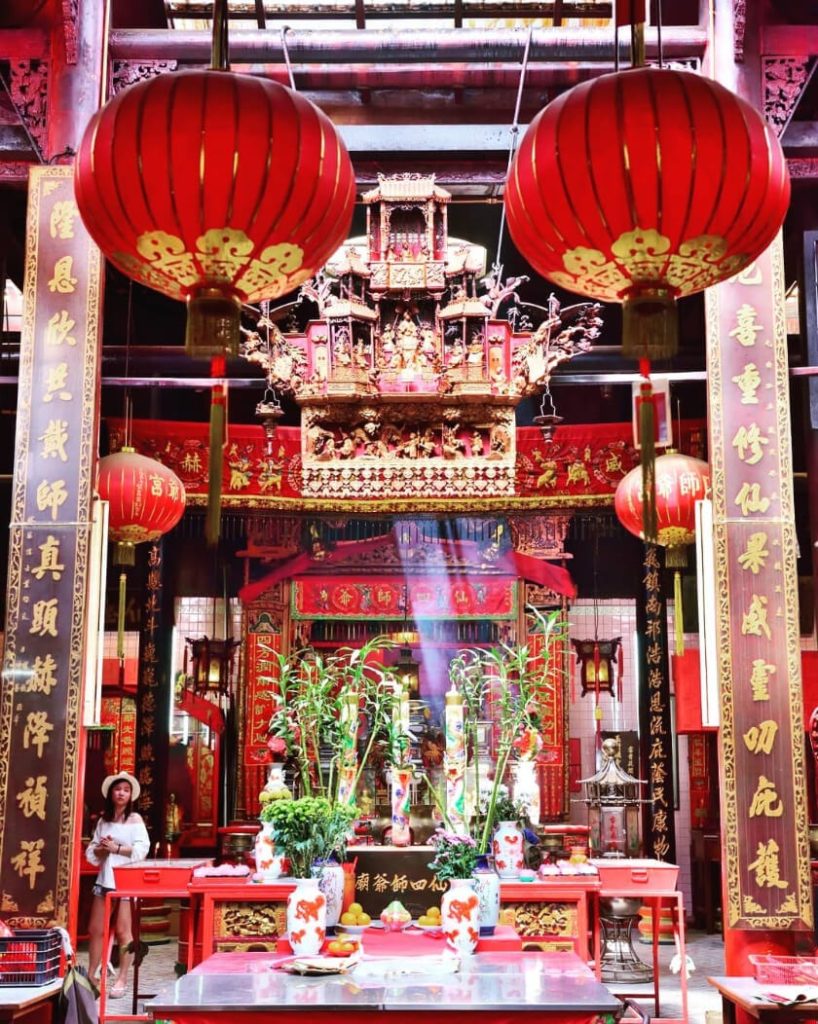
6. Chan See Shu Yuen: a clan temple covered in detail
Chan See Shu Yuen, founded in 1906 by the Chan clan, is one of the oldest surviving clan temples in the city and among its best-preserved heritage buildings. The draw is the detail: delicate roof carvings, colourful ceramic figures along the ridges, and old wooden panels everywhere you look. The temple sits right beside Jalan Petaling, yet the courtyard stays surprisingly calm, with incense drifting through the air. Opening hours run from about 9 am to 5 pm daily.
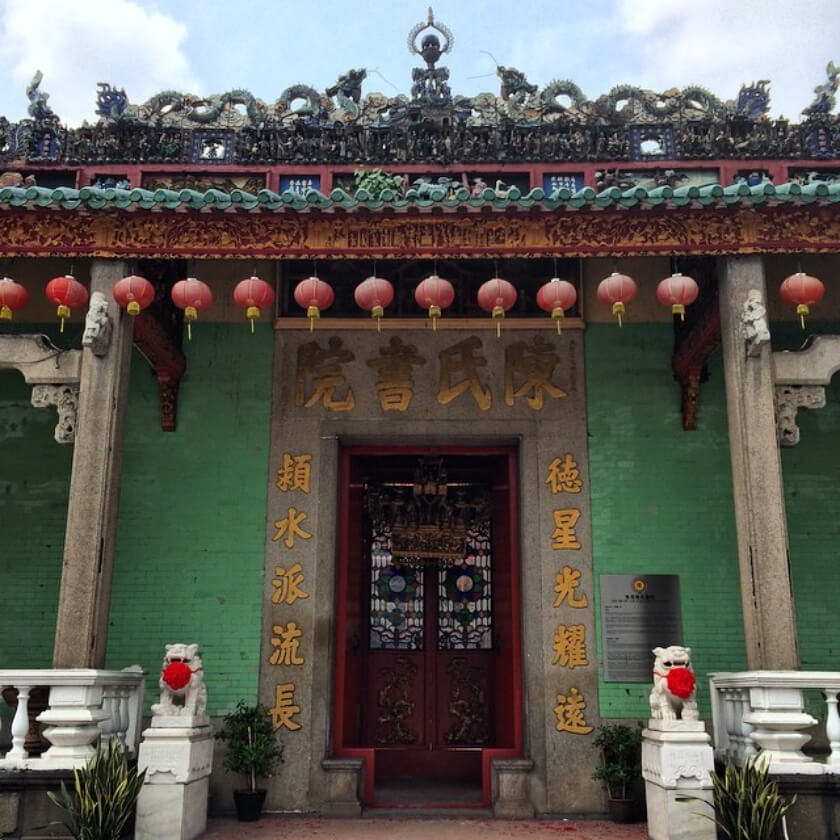
Pro tip: Look up first. The roof ridge carries the best of the ceramic work, and most visitors never tilt their heads long enough to see it.
7. Wat Meh Liew: a Thai Buddhist hideaway off Jalan Tun Razak
Wat Meh Liew began in 1929, started by Madam Yap Yoke Liew, a Chinese-Thai woman from Phuket, and it remains the oldest Thai Buddhist temple in KL. The compound sits off Jalan Tun Razak near the Pekeliling roundabout, closer to the city centre than its calm suggests. A huge golden seated Buddha anchors the main hall, with murals, smaller shrines and rooflines that borrow generously from Thai temple architecture. The temple opens from about 9 am to 8 pm daily.
Pro tip: Mornings are the move here. We have found the grounds at their calmest before 10 am, when the light is softer and the day has not yet filled the compound with noise.
8. Kuan Yin: a small temple for the goddess of mercy
Kuan Yin Temple on Jalan Maharajalela is smaller than almost everything else on this list, and that is part of its pull. Dedicated to the goddess of mercy, it has served worshippers for generations, and locals still come to pray for health, luck and protection. Red lanterns, small altars and a steady curl of incense make it a five-minute stop that somehow resets the day. Opening hours run from about 9 am to 5 pm daily.
Pro tip: If your temple itinerary stretches beyond KL, Sam Poh Tong cave temple in Ipoh is a different kind of stop entirely, built into a limestone hill.
9. Deng Be Ann: a quiet Hakka landmark near KLCC
Deng Be Ann is one of the lesser-known temples in the city, built by the Hakka community and dating to the late 1800s. It sits along Jalan Ampang, an easy walk from the KLCC end of the golden triangle, which makes it the simplest add-on if your day already includes the towers. The temple is small: wooden beams, old roof tiles, faded carvings, incense burners and red lanterns, with a quietness that rewards a slower pace.
Pro tip: Many people walk past this one without noticing it. If you are coming from KLCC, budget twenty unhurried minutes rather than five.
10. Chee Wan San: golden Buddhas along Jalan Sungai Besi
Chee Wan San is among the largest Mahayana Buddhist temples in KL, sitting on roomy, green grounds along Jalan Sungai Besi in the south of the city. Inside the main hall, three gold Buddha statues rest behind glass, flanked by other statues and a bronze urn that regulars come specifically to see. The temple opens from about 7:30 am to 4:30 pm daily, and on Wesak Day it fills with lanterns, ceremonies and visitors, so festival visits need an early start.
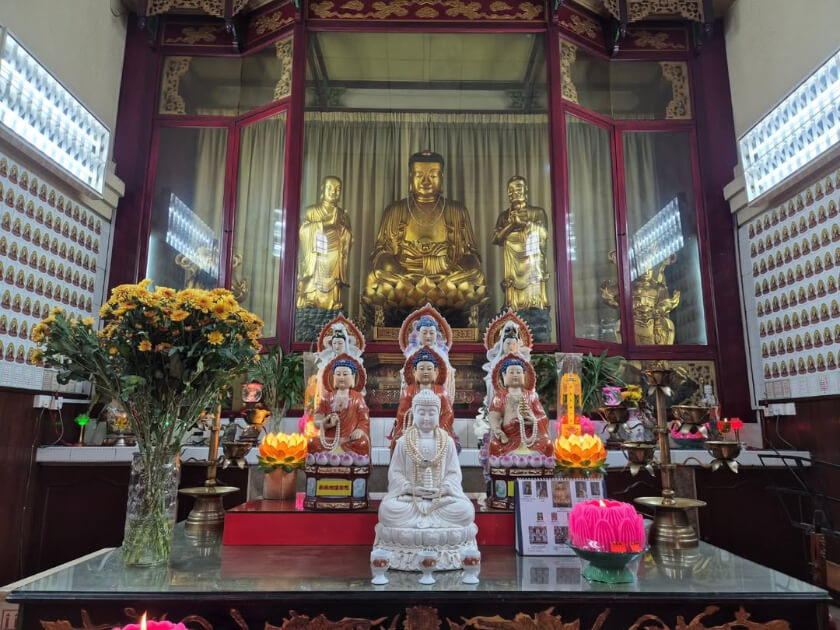
Pro tip: This is the stop that pairs naturally with a car. Public transport along Sungai Besi works, but the temple sits far enough south that driving halves the hassle.
Final thoughts on planning a KL temple day
The easiest full day shapes itself: Batu Caves in the cool of the morning, Thean Hou for sunset, and the Chinatown cluster of Sri Mahamariamman, Sin Sze Si Ya, Guan Di and Chan See Shu Yuen walked on foot in between or saved for a second day. We left each of these temples feeling a little quieter than we arrived, which is the honest test of a temple visit. When the temple day ends, the city takes over again: our guide to more fun activities in KL picks up where the list above stops, KL after dark covers the evening, and if the day ends hungry, our buffet dinner and halal hot pot guides handle the eating part.
FAQ about temples in Kuala Lumpur
Q: What is the most famous temple in Kuala Lumpur? A: Batu Caves. The 272 rainbow steps and the giant golden Murugan statue make it Malaysia's most-visited Hindu shrine and the heart of Thaipusam. It sits in Gombak just north of the city; a KTM Komuter train from KL Sentral takes about 30 to 40 minutes and stops at the foot of the steps.
Q: Is Batu Caves free to enter? A: Yes, the main Temple Cave and the staircase are free. Side attractions such as the Ramayana Cave charge separate admission, and there is a small fee if you rent a sarong at the dress-code point. For more free things to do in KL, see our guide to free things to do in Kuala Lumpur.
Q: What should I wear to temples in Kuala Lumpur? A: Cover your shoulders and knees at Hindu and Buddhist temples, and remove shoes before entering shrine halls. At Batu Caves, skip sleeveless tops and short shorts or skirts; sarongs are available to rent at the entrance.
Q: What time do the main KL temples open? A: Batu Caves opens daily from about 7 am to 9 pm. Thean Hou's shrine opens from 8 am, with the grounds staying open later. Sri Mahamariamman opens in two sessions, roughly 6 am to midday and 4 pm to 8:30 pm. Hours shift during festivals, so check before you go.
Q: When is Thaipusam 2027 and Wesak Day 2027? A: Thaipusam falls on Friday 22 January (2027), when Batu Caves draws its biggest crowds of the year. Wesak Day falls on Thursday 20 May (2027), when temples like Thean Hou hold lantern processions and dawn prayers.
Explore Kuala Lumpur's temples with TREVO
Linking Batu Caves, Thean Hou and the Chinatown temples in one day is much simpler with your own set of wheels, and the same is true for festival dates when trains run packed. Browse cars on TREVO to see what is available for your dates. TREVO is Malaysia's peer-to-peer car rental marketplace; every listing is priced individually by its host, so check the specific car and dates before you book. It operates across the Klang Valley, Penang, Johor Bahru, Kota Kinabalu, Kuching and more, which makes it just as useful for temple days in KL as for a road trip out of the city.